Sunday, October 21, 2012

Is Government Spending Wasteful?

I just recently read an article concerning wasteful government spending.  Although the government uses tax money for many worthy causes (schools, banks, transportation, and others), government spending can also be considered wasteful.

For example, the government had "a $939,771 experiment funded by the National Institutes of Health in Michigan and Texas that tested fruit flies to discover that male fruit flies are more attracted to younger female fruit flies than older ones."

This seems like a complete waste of money.  What good is it to test whether male fruit flies are more attracted to younger or older females, especially when it cost taxpayers $1 million.  

I don't know what prompts the government to fund these seemingly useless experiments, but they have to stop wasting taxpayers money.  Although it is not listed in this article, another article shows that the government loses $70 million annually producing pennies.

REALLY?

What is the point of making pennies anymore?  If the rate of inflation has made the price of producing pennies twice as much as the value of pennies, stop making them!  Some of the things the government spends its money on ceases to amaze me.  Instead of these unnecessary expenses, CUT TAXES.

The government spends "nearly $1 million annually on developing a so-called 'Mars menu.'"

Is it really necessary to try to develop foods that can be eaten on Mars even though we are at least 2 decades away from having a man on Mars?

Do you think the government spends money recklessly on unnecessary things?  And do you think the government should cut taxes instead of wastefully spending taxpayer money?  Leave comments below.

Sunday, October 14, 2012

A little too much information

I recently read an article about the election, that focused on voters' lives.  It demonstrated how political figures may have too much information on people's lives.  

"Strategists affiliated with the Obama and Romney campaigns say they have access to information about the personal lives of voters at a scale never before imagined. And they are using that data to try to influence voting habits".

Are candidates so worried about getting votes that they are looking into people's personal lives to try to influence them?  This seems like a violation of privacy.  They even know things about people that their friends might not even know:

"The callers [have] access to details like whether voters may have visited pornography Web sites, have homes in foreclosure, are more prone to drink Michelob Ultra than Corona or have gay friends or enjoy expensive vacations".

I would not want strangers to know these things about me and would be offended that someone was working that hard just to get my vote.  Although the campaign managers say that they are trying to protect privacy, I would feel uncomfortable if they knew this information.

I applaud the candidates for trying this hard to get more votes, but at what cost?  Is it worth confidentiality?  Presidents are supposed to do their best to protect the citizens of the United States, but they are allowing members of their campaign to seek personal information about voters so they can sway them.  This almost seems like desperation.

Do you think that getting this personal information from voters is a violation of privacy?  Would you want people to know certain information about you?  Feel free to leave comments below.

Tuesday, October 2, 2012

"Broke"


Tonight I was watching ESPN 30 for 30.  This was a particularly interesting episode because it talked about the finances behind athletes and how many of them spend all of their money and go broke.  This is an overview of the episode.  Many athletes come from poor families that do not deal with large sums of money.  

Sean Salisbury, a former NFL player, said "I made more money in one check than my father made in three years."  This was a man who had grown up with little money and was now given more money in the form of one piece of paper than his father had made in three years.  Athletes just don't know what to do with their money.

When they rise to stardom, they are bombarded with constant business deals and endorsements.  About 1 out of every 30 or 40 of these deals is actually successful where the athlete gets their money back.  Almost all the rest of them fail and all money is lost.  Straight out of college, these athletes do not have experience with money. They hire agents to try to help them with their money, but some of these agents are hindrances.

Agents generally take 10% of a player's contract and sometimes deal with all the money a player obtains.  This means expenses, taxes, insurance, and mortgage.  Unfortunately, many of these agents are scammers.  One agent stole 5 million dollars from one player and did not file his taxes so the IRS knocked on his door asking for 1 million dollars.

In order to prevent this, agents hire financial managers to help them create a budget.  Although financial advisors are more reliable, some are still scammers.  Michael Vick's financial advisor was running a ponzi scheme from her house and Vick was out 6 million dollars.  Athletes are naive and with the rapid increase in salary over the recent decades, athletes have more money to spend.

The word "Broke" refers to the fact that 3/4 of NFL players are under financial stress or have gone bankrupt two years after they retired.  This stat is amazing.  These players cannot stop spending and when their career ends, they have no source of revenue.

Due to player's egos, they always want to have more than their counterpart.  This is why many athletes wear chains and bling bling to demonstrate their worth.  It is a matter of "anything you can do, I can do better".  Athletes are spending upwards of 1 million dollars on jewelry alone.

In these times, many people only worry about money and will do illegal things to take advantage of the naive.  America needs to better educate young athletes about the dangers of the financial world.  Athletes need to budget their money and not feel the need to spend compulsively.  The average NFL career length is 3.5 years.  Players that spend their money between paychecks will be broke the second they retire.  Obviously it is up to the players to make smart financial decisions but with all the media attention, it's tough not to show off the money you have.  Players need to worry about their own money with the help of others instead of others doing the work for the players.  Otherwise the bankruptcy will continue.  The American identity values fame and fortune, but not when it leads to bankruptcy.
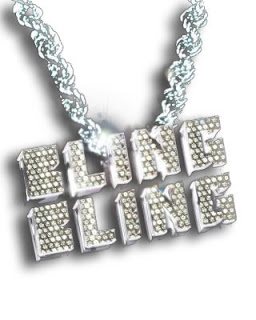
Why do you think agents steal money illegally from the players?  How do you think players can manage their money better?  And why do you think they have this urge to spend all their money?  Please leave comments below.

And in the words of the great Biggie Smalls, "Mo Money, Mo Problems"

Wednesday, September 19, 2012

1600 Pennsylvania Avenue

Today my AiS class went on field trip to the Court Theatre to see the play Jitney, the Osaka Gardens, and finally to the Museum of Contemporary Photography at Columbia College. At the museum, there was one exhibit which I found very interesting.

This exhibit featured about 10 different photographs of all different kinds of houses; however, they all had one thing in common: their address.  The address, 1600 Pennsylvania Avenue.  What comes to mind?  The White House in Washington D.C.?  That was what I originally thought of when I viewed the address.  Upon further inquisition, I realized what the exhibit meant to me.

All of these houses were in different locations around the country in a vast array of areas.  One looks like a barn, another a building, another a rural house, and one a lower-quality house.  Interestingly, there was no photo of the White House.  This signifies how all of these buildings have the same address, but only one most people consider to be important.  I bet that if anyone mentions the address 1600 Pennsylvania Avenue, they are mentioning the one in Washington D.C., not the one in Indiana or even Arizona.

I personally think that this confusion is due to priority and recognition.  Most people consider the President to be very important and famous.  Since we recognize him, we know the address of his house-- which is a famous monument itself.  People are so caught up in fame, they immediately associate the 1600 Pennsylvania reference to the White House, when 1600 Pennsylvania is just a way to identify a solitary location in a given state, not the nation.

This fame idea is similar to Timothy Treadwell from Grizzly Man.  His father claimed he went downhill after he did not get a part on Cheers.  This American view of celebrity warps people's minds.  Some people spend their whole life trying to be famous and gain recognition.  For example, Will Ferrell is an actor, just like any of the characters we saw in Jitney today.  Same as a member of theater at New Trier.  However, their degree of fame separates them.  The majority of people recognize Ferrell, but not a New Trier actor.   This perception of fame shapes American culture.  

The idea of fame is just like 1600 Pennsylvania Avenue but with buildings instead of people.  The White House has an aura and is well-known, unlike any ordinary house with the same address.  This exhibit really changed my view on how Americans perceive fame and how important it is to society.

Feel free to leave other comments about the exhibit if you saw it.  Also, how do you think Americans perceive fame?  And is it fair to rule out less famous people with the same jobs or lesser-known buildings with the same address because you do not recognize them?


Tuesday, September 11, 2012

In Memory of 9/11

I was siting in advisory today listening to the morning announcements, which I and everyone else normally ignores, but today I had a reason to listen.  Today marks the 11th anniversary of 9/11 and I definitely wanted to show my acknowledgement with a moment of silence for all the victims.  Obviously this was a horrendous attack on the world trade center, Pentagon, and the attempt on the White House or Capital.

However, there were only about 3,000 deaths.   This number is similar to the death tole on any other day.  So what makes this event so special?  I believe it has a significant impact on American society, not only because it was a terrorist attack, but it sparked patriotism.  I read an article about some of the changes Americans made in their social life after the 9/11 attacks.

Not only were people displaying American flags outside their houses, they were hanging them from their cars and other places.  People also started to have different perceptions of others.  One woman said that "I think you're a little more cautious because you don't always know who your neighbor is."  People did not know who to trust and were scared that the mighty America had been attacked.

After the attack, people were more cognizant of their surroundings as well.  Airports cracked down on anyone with anything sharp, liquid, or dangerous.  In addition, people were cautious when it came to air travel.  No one wanted their flight to be one that crashed.

Now looking back,  it seems as if a lot of information has surfaced about hints that something was going to happen.  For example, when the pilots that flew the four planes went to pilot school, they only wanted to learn how to fly, not land.  In retrospect, it is easy to blame people for not doing something that could have stopped the attack.

I would argue that although this event was tragic and devastating, it may have been a little bit good for America.  People became more patriotic.  The government became more aware of possible threats.  And it gave the US motivation to hunt down Al-Qaeda and Osama Bin Laden.  By no means am I saying the event was a good thing, but I think America emerged stronger.

Do you think America was stronger after 9/11?  And do you think 9/11 had a bigger impact than just 3,000 deaths?


Saturday, September 8, 2012

National Conventions Word Chart

The Democratic National Convention has just ended and in reflection, I was looking at the word chart that we discussed in class.  This chart shows the number of times each word was used by a particular party.  While the chart does not account for context, it does a pretty good job summarizing the points made at the two conventions.

For example, the Democrats used the word "millionaire" 7 times while the republicans did not use it once.  When in context, "millionaire" was used in a negative way, taking a shot at the Republicans for lowering taxes for millionaires.  Context aside, this chart is very instrumental.

Many inferences can be made about the chart, but I wanted to talk about a specific few.  First, it appears as if many of the words on both sides focus directly on Obama and how he did as president.  This is not a surprise; however, it seemed as if the speeches were more reflective as oppose to what a candidate will do once he becomes president.

Some of the words that evidence this on the Republican side are "business", "Obamacare", "fail", "spending", "unemployment", and "debt".  All of these words refer to what the Republicans believe Obama did incorrectly as president.  The Republicans are not big fans of the new healthcare reform and refer to it as Obamacare more than Medicare because they believe that it is a doing of Obama and will only survive if a democrat stays in office.  A lot of the other words surround business because the economic issues in the country.  By describing the unemployment rate under Obama as well as the government spending and debt, it may seem like a turn-off.  It is very interesting that the Republicans used "fail" so much.  This implies that the believe Obama has failed as a president.

On the democratic side, the words that show Obama's successes are "Medicare", "education", "Bin Laden", "middle class", "workers", "seniors", and "women".  The Democrats believe that the new Medicare bill was very successful because everyone now has healthcare, even though it may cost hospitals a significant sum of money.  The Democrats also mention Bin Laden while the Republicans did not mention his name once because the killing of Bin Laden was a major success.  It is not easy killing the number one terrorist.  The majority of the other words refer to the normal or ordinary people of the middle class and the same treatment of seniors and women.  Obama is a big proponent of supporting the working middle class and by mentioning words that relate to them, he may gain more of their votes.

In summation, it seemed like the conventions significantly focused on how well Obama has performed at president. Now the big question for voters is: Did the Republicans do a better job of explaining how Obama has been a bad president or did the Democrats do a better job of explaining how Obama has succeeded?

Please leave comments about other patterns you noticed in the chart or your stance on who did a better job.

Saturday, September 1, 2012

Campaign Lies


The next presidential election is coming up this November and we are starting to see ads on TV. Every year these campaigns seem to focus more on the shortcomings of the other candidate than the advantages of themselves.  I read an article explaining how many candidates stretch the truth and take quotes out of context.  Brooks Jackson, the director of factcheck.org, said that, "at various points this year both sides have blithely gone on repeating statements that were found false."  He went on to say "'They don’t care...because it gets votes."'  Obviously candidates want more votes, but why can't they be truthful? Instead of talking about the disadvantages of your competitor, candidates should talk about the advantages of electing them.  Mitt Romney released a video last year that focused on the mistakes of Obama.  Political views aside, it is not ethical to talk about how bad a specific candidate is no matter what one's stance or opinion is.  Why do you think that political figures always say the problems with the other candidate? And do you think this is ethical?